Showing posts with label Air. Show all posts

Thursday, October 16, 2014

Solid Waste Disposal: The Business of Incineration


Solid Waste Disposal: The Business of Incineration

The need to properly dispose of solid waste has been around for centuries.  Today, solid waste disposal is a multibillion dollar industry.  Unfortunately, this industry also has the potential to have an adverse impact on the environment.  However, the need to conduct solid waste removal in a profitable and environmentally friendly way will always be of the utmost importance.  Though there are many methods to handling solid waste, such as landfills and composting, the use of incineration or Waste-To-Energy (WTE) has largely been missing in the United States.
Constellationevolution
There are several benefits to utilizing WTE facilities but they are primarily created to reduce or eliminate the need for landfills.  Landfills, if not maintained properly, can  pose a serious risk to the ground water, release methane gas, and leave the land unusable for future development.  Incineration, with the use of specially designed filters, can create a reliable source of clean power generation and waste reduction.  The power from these WTE plants can then be sold to consumers at a reasonable rate.
These WTE plants also come with their own down side and environmental risks.  WTE facilities are known to emit pollution such as soot, heavy metal vapors, and acidic gases.  After the incineration/power generation process has been completed, left over ash and heavy metal debris must be disposed of appropriately.  If not properly regulated, emissions from WTE plants can have a significant negative impact on air quality.  Also, there is always the possibility that people and wildlife surrounding a WTE plant could be exposed to harmful airborne waste byproducts.
Vattenfall
There are business opportunities at every stage of the waste disposal process.  Though Waste-To-Energy facilities are not the answer to our environmental and energy needs, they should be a part of the solution.  Recycling and re-purposing of all materials should always be the first in a series of steps prior to incineration.  The need to reduce or eliminate the need for landfills should continue to be top priority.  Many nations in the European Union have already adopted a robust strategy that includes a mix of recycling, WTE, and landfills.

Related Links

Thursday, July 24, 2014

Three Ways to Reduce Our Carbon Footprint Naturally

Three Ways to Reduce Our Carbon Footprint Naturally
The need to reduce our global carbon footprint has steadily become more and more important due to climate change.  There are various industrial techniques used to capture and store carbon.  However, there are also many natural ways to capture and store carbon without the need for complex technologies.  Many of these techniques, especially when applied on a large scale, are effective techniques that work seamlessly with the environment.
younglesonphotoblog.files.wordpress.com
Saltwater marshlands create an important ecosystem for various forms of wildlife.  These marshlands can be found alongside rivers and shorelines.  Marshlands are also prodigious in the task of carbon capturing.  Instead of the carbon remaining in the atmosphere where it is a greenhouse gas, carbon is captured from the air and then naturally transferred into the soil.
Planting a new forest, or replanting a location that was clear cut for the timber industry, is an effective method of restoring habitat while creating a natural carbon sink.  Unlike more mature forests, new forests require more carbon during their initial growth years.  While this effect will eventually slow as these trees become older, the overall impact on the environment and the wildlife is essential for a healthy planet.
gardening.stackexchange.com
Weeds, or otherwise undesirable plants, can also be another natural method to capture excess carbon from the environment.  Unlike most domesticated plants, weeds can thrive in intense sunlight, high temperatures, and elevated levels of carbon dioxide.  Weeds also help to stabilize the surrounding soil with their deep roots.  This stabilized soil creates the type of habitat and micro-climates that are beneficial to the growth of small seedlings.
www.clouds365.com
When all three of these concepts are performed in concert they can have a lasting positive impact on the health of the environment.  No one carbon capture technique will effective on its own.  There has to be a concerted effort on all nations to work towards environmentally friendly and cost effective carbon capture methods.  The negative effects of climate change can be avoided if these nations collaborate with each other sooner rather than later.

Additional Reading:

Wednesday, February 5, 2014

Bio-fuels - Extraordinary Possibilities


Bio-fuels: Extraordinary Possibilities
Bio-fuels have been known to be an excellent replacement for traditional gasoline and diesel for years.  Fossil fuel production, especially when obtained through hydraulic fracturing, can cause significant damage to the environment.  Eco-Enthusiasts have gone to great lengths to make their cars compatible with this new fuel.  These people have the will and desire to be completely free of fossil fuels.  Sadly, none of these bio-fuels have actually achieved any real traction.  Most people, especially those with busy schedules, have not gone to such lengths and have instead decided to avoid the hassle and cost of converting their vehicles.  No car company or energy company has come up with a solution to this problem.
newscenter.lbl.gov
 Part of the problem, which is typical of new technologies, is that the cost of purchasing this new equipment is too expensive for the customer.  Furthermore, obtaining bio-fuels in the open market, especially in the United States, is significantly more difficult than obtaining gasoline or diesel.  It is also difficult for the leadership of publicly traded companies to convince their shareholders that making an investment/risk in the bio-fuels market would actually pay off in the near-term.  Shareholders, in most cases, want to do what is in their financial best interest and not necessarily what is in the best interest of energy independence.
bloggingbiofuels.com
Bio-fuels do have a bright future when they can be applied to a market driven economy effectively.  Designs must be highly adaptable and attractive to the end user.  For instance, a successful Eco-friendly vehicle would have a solar panel on the top of the car, a battery plug in on one side of the car, and port for filling bio-fuel on the other side.  By giving the end user a variety of options you make the vehicle more attractive and marketable.  With a mix of wind, solar, hydroelectric, and wave energy, these bio-fuels can allow society to end its dependence on fossil fuels.
civitas.org.uk
The one thing that is lacking in the discussion is a solution that does not put Automotive or Energy Companies in a defensive posture.  Actually, an Energy and Automotive Company partnership would have the greatest chance of successfully designing, building, marketing, and distributing bio-fuel cars to the marketplace.  A partnership like this makes sense because the organizations have a symbiotic relationship with each other.  This partnership would also allow both organizations to reduce the risk inherent in a significantly challenging investment.  Ironically, there are already some groups trying to figure out how to produce bio-fuels out of organic waste.  Mass producing such a concept would help drive the conversion from gasoline/diesel to bio-fuels.

Saturday, February 1, 2014

Amazing Airships - Cargo Transport Reinvented

Amazing Airships - Cargo Transport Reinvented


Airships are designed to be sturdy and cross great distances.  The older airships, such as the Zeppelin, created buoyancy through the use of hydrogen.  Unfortunately, hydrogen is highly unstable and can become explosive if exposed to static electricity or lighting.  The Hindenburg disaster demonstrated how dangerous hydrogen was to public safety when an entire Zeppelin caught fire.  The airships of today have come a long way since the Zeppelin era.  Modern Airships utilize helium, which is stable and safer than hydrogen, to create buoyancy.  To ascend, the ship releases compressed helium gas from its tanks to displace the air that had originally filled the hull.  To descend the ship compresses the helium and allows air to refill the hull.
Popular Mechanics


Northrop Grumman is creating airships for military purposes but Lockheed Martin and Worlwide Aeros Corporation are creating airships for transporting cargo.  The cargo application, especially the Worldwide Aeros Corp., Aeroscraft airship, is appealing because it requires no runway to take off or land.  The Aeroscraft can also carry 66tons of cargo, more carrying capacity than a Boeing 767, which can be transported anywhere in the world.  There is no surprise that most of the capital investment behind these projects comes from NASA and the Pentagon.  The average investment firm is not going to take the risk on an unproven and futuristic helium airship venture.
Orange County Register

This technology is important because this capability will allow large amounts of cargo to arrive in remote locations that were traditionally impossible to reach.  This also means that, through the use of GPS technology, these airships can allow distributors to bypass old international transportation routes and deliver cargo closer to the customer.  The need for special equipment and large diesel trucks will eventually become obsolete when this technology is refined and mass produced.
Popular Mechanics

Why this is all important for the environment and safety?

1)         This new technology is better for the environment.  Unlike powerful cargo planes, there is no need for high fuel consumption jet engines and large wing spans to create lift.  These new airships only need enough fuel to propel them to their locations and compress the helium hull for descent.

2)         There is no need for the dredging operations that are required to maintain a port for large shipping vessels.  In order to lower the cost of transportation and increase the profitability of shipping operations many ship builders continue to make their ships even larger than before.  Larger ships require ports to perform more dredging which negatively impacts marine life. 

3)         Airships, unlike large shipping vessels, will not be exposed to the same dangers from pirates.  Airships can cross the vast oceans and never once come in contact with a pirate.  This means the crew will be safer and the amount of insurance required in the event of a loss will be much lower.

Tuesday, January 28, 2014

Refrigerants and the Challenge of Lessening Their Impact to the Environment


Refrigerants and the Challenge of Lessening Their Impact to the Environment
Refrigerants are a necessity of modern life.  Refrigerants allow us to keep our food fresh in our home refrigerators and keep our cars & homes cool on hot days.  Unlike commercial or industrial applications, which use ammonia cooling and large heat exchange towers, residential applications usually utilize chlorofluorocarbons (CFCs) or hydro- fluorocarbons (HFCs) as a refrigerant.  These are preferred in residential cooling systems because they require a relatively small heat exchange system, are non-flammable, and are safe in low concentrations.  Evaporative cooling, which is an effective air conditioning method in dry climates, is not effective in cooling homes in humid climates.
evaporativecooleraustralia.com.au

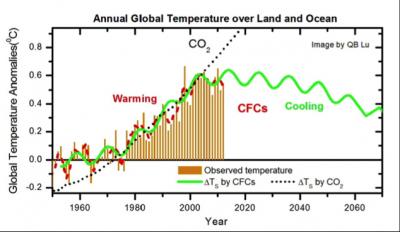
Unfortunately, CFCs are very effective at breaking down the Ozone (O3) Layer which prevents ultraviolet light from reaching the earth’s surface.  The Montreal Protocol, which was initiated in 1987, limits the use of CFCs to limit the damage to the Ozone Layer.  Also, HFCs are powerful greenhouse gases that heat the atmosphere which contributes to global warming.  The Kyoto Protocol, which was initiated in 1997, limits the use of HFCs in order to reduce global warming.  These two protocols show that there is an international desire to reduce damage to the ozone layer and global warming.  Nevertheless, creating treaties and other superficial public demonstrations of concern are not going to create enduring change on the health of the environment.  Plus, people don’t seem to want to deal with extremely hot temperatures without some form of refrigerant.
esciencenews.com

Creating new, and safer, refrigerants are a priority for everyone because we all need refrigeration, in some form or another, in our daily lives.  There are some organizations that are funding research into creating refrigerants that are better for the environment.  For instance, the American Society of Heating, Refrigerating, and Air-Conditioning Engineers (ASHRAE) is currently funding research into a new substance that will not harm the ozone layer and will have a minimal impact on the environment.  However, this new product has only been applied to commercial uses and has not been tested in residential home appliances.  Hopefully, with further research this project may be able to create products for home and automotive use.  Currently, a profitable, and environmentally friendly, method of refrigeration to the public remains challenging.
cdn.physorg.com

No doubt, there are many issues facing the average consumer in today’s world.  Those consumers are, more often than not, focused on caring for their families and getting every ounce of value for their hard earned money.  Therefore, there is little or no reason for companies and private funding to invest in researching this important issue.  The first question is how can companies can deliver this safer option and maintain their earnings for their investors.  The other question is whether the public would be willing to pay a price premium for this environmental option, whatever it may be, in order for companies to remain viable during the product’s introduction.  The fact remains, further public awareness on this issue will create more charitable funding, corporate research, and effective environmental policies.

4 Environmentally Conscience Celebrities to Watch in 2014

4 Environmentally Conscience Celebrities to Watch in 2014

Many wealthy individuals participate in philanthropy to make a difference in their community or to support causes that matter to them.  When a celebrity endorses and donates to a cause it has the potential to increase that cause’s ability to raise capital.  These celebrities influence their fans to donate and bring much needed media attention.  Environmental causes are no exception to this phenomenon.  Here are five celebrities that are currently promoting environmental causes.
 Matt Damon 
photo by Nicolas Genin
Back Ground:  Achieved notoriety from his role in the movie “Good Will Hunting”.  Mr. Damon (pictured wearing dark suit jacket) is slated to star in two movies for release in 2014 “Interstellar” and “The Monuments Men”.
Activity:  Mr. Damon currently donates to 30+ Charities and is the founder of H2O Africa.
“In 2009, H2O Africa and WaterPartners International merged to become Water.org. The combined organization delivers sustainable programs in Africa, Asia, and Latin America including Haiti.” –h2oafrica.org
 Cate Blanchett


fanpop.com

Back Ground:  Achieved notoriety from her role in the movie “Elizabeth”.  Cate Blanchett is slated to star in: 2014 - The Monuments Men, How to Train Your Dragon 2, The Hobbit: There and Back Again, and 2015 - Cinderella

Activity:  Cate Blanchett currently donates to 5+ Charities and has helped to promote the SolarAid campaign.

“Our goal is to eradicate the kerosene lamp from Africa by 2020.” – http://solar-aid.org

Leonardo DiCaprio 

photo reference link
 Back Ground: After a brief stint on the situational comedy (Sitcom) Growing Pains, and a few small movie roles, Mr. DiCaprio’s Back had his breakout role in the movie What’s Eating Gilbert Grape.  Mr. DiCaprio is slated to produce the movie Live By Night which is to be released in 2015

Activity:  His foundation the Leonardo DiCaprio Foundation has workined to protect tigers from extinction, save the rainforest, protecting the oceans, saving the sharks, protecting Antarctica, and providing access to clean water.

“Dedicated to protecting Earth’s last wild places and fostering a harmonious relationship between humanity and the natural world” – Leonardo DiCaprio Foundation

Daryl Hannah
fanpop.com
 Background:  Daryl Hannah (pictured wearing white dress) is mainly known for her roles in “Blade Runner” and “Kill Bill”.  Last film was the movie “Hot Flashes”.

Activity:  She is the cofounder of The Sustainable Biodiesel Alliance.  In 2013 The Sustainable Biodiesel Alliance created the sustainable biodiesel certification.

“The primary mission of the Sustainable Biodiesel Alliance is the completion of an independent sustainability certification system for U.S. Biodiesel Feedstock, Production, Distribution and end use fuel” – The Sustainable Biodiesel Alliance