Showing posts with label Pollution. Show all posts

Tuesday, May 13, 2014

Clean Water - Good for the Environment and Great for Business


Clean Water – Good for the Environment and Great for Business


Clean water is a necessity for not just humans but for an array of wildlife.  There is no possible way to sustain life on this planet without clean water.  Yet, everywhere we turn we see examples of clean water becoming polluted, wasted, and depleted.  To add to this challenge is the need to obtain fossil fuels for the everyday energy requirements of modern life.  The two main ways fossil fuels come into the picture are by hydraulic fracking and off shore drilling.  There is even a desire by many energy companies to start off shore drilling in the pristine waters of the arctic.
photoeverywhere.co.uk
This is important to everyone on the planet because, even when sea water is affected, water pollution has a detrimental effect on the entire ecosystem.  Clean water is also important to a variety of businesses.  The first businesses that are affected are the many fishing companies that rely on the sea for their livelihood.  Then, water pollution affects tourism for all areas that are downstream of the source or are on the coast close to the source.  Finally, it affects shipping lanes that have to be halted or diverted during clean up periods.
wikispaces.com
From a strictly environmental standpoint, it is easy to simply demand that companies end all fossil fuel use immediately.  However, abruptly ending fossil fuel use without an abundance of renewable energy sources and the infrastructure to support them would hurt, if not severely harm, the world economy.  Publicly traded firms are required, by their investors, to be as profitable as possible at all times even if that means doing things that are not environmentally friendly.  Therefore, the public has to give these corporations the latitude to, at least for a relatively short period of time, not be as profitable while they transition to more sustainable methods of delivering energy.
Peter Smithson
There needs to be a global understanding of the quandary that energy companies are in.  In one instance they have to do what is right for their investors, and also do what is right for the environment.  Surprisingly, the very investors that are demanding profits above all else are also the ones that want these companies to be environmentally friendly.  Unfortunately, most investors would simply force the company to figure out the monumental task of transitioning from fossil fuels to renewable energy without ever considering a possible a momentary slowdown of record breaking profits.  The ability to improve our water ways and oceans is up to us.  Fortunately, once we realize that we are contributing to the reckless nature in which corporations deal with the environment we can have a cleaner planet.

Tuesday, January 28, 2014

Refrigerants and the Challenge of Lessening Their Impact to the Environment


Refrigerants and the Challenge of Lessening Their Impact to the Environment
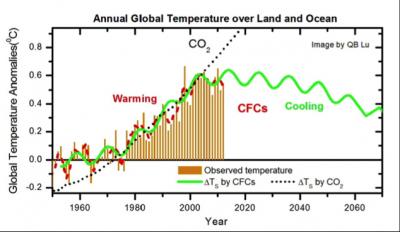
Refrigerants are a necessity of modern life.  Refrigerants allow us to keep our food fresh in our home refrigerators and keep our cars & homes cool on hot days.  Unlike commercial or industrial applications, which use ammonia cooling and large heat exchange towers, residential applications usually utilize chlorofluorocarbons (CFCs) or hydro- fluorocarbons (HFCs) as a refrigerant.  These are preferred in residential cooling systems because they require a relatively small heat exchange system, are non-flammable, and are safe in low concentrations.  Evaporative cooling, which is an effective air conditioning method in dry climates, is not effective in cooling homes in humid climates.
evaporativecooleraustralia.com.au

Unfortunately, CFCs are very effective at breaking down the Ozone (O3) Layer which prevents ultraviolet light from reaching the earth’s surface.  The Montreal Protocol, which was initiated in 1987, limits the use of CFCs to limit the damage to the Ozone Layer.  Also, HFCs are powerful greenhouse gases that heat the atmosphere which contributes to global warming.  The Kyoto Protocol, which was initiated in 1997, limits the use of HFCs in order to reduce global warming.  These two protocols show that there is an international desire to reduce damage to the ozone layer and global warming.  Nevertheless, creating treaties and other superficial public demonstrations of concern are not going to create enduring change on the health of the environment.  Plus, people don’t seem to want to deal with extremely hot temperatures without some form of refrigerant.
esciencenews.com

Creating new, and safer, refrigerants are a priority for everyone because we all need refrigeration, in some form or another, in our daily lives.  There are some organizations that are funding research into creating refrigerants that are better for the environment.  For instance, the American Society of Heating, Refrigerating, and Air-Conditioning Engineers (ASHRAE) is currently funding research into a new substance that will not harm the ozone layer and will have a minimal impact on the environment.  However, this new product has only been applied to commercial uses and has not been tested in residential home appliances.  Hopefully, with further research this project may be able to create products for home and automotive use.  Currently, a profitable, and environmentally friendly, method of refrigeration to the public remains challenging.
cdn.physorg.com

No doubt, there are many issues facing the average consumer in today’s world.  Those consumers are, more often than not, focused on caring for their families and getting every ounce of value for their hard earned money.  Therefore, there is little or no reason for companies and private funding to invest in researching this important issue.  The first question is how can companies can deliver this safer option and maintain their earnings for their investors.  The other question is whether the public would be willing to pay a price premium for this environmental option, whatever it may be, in order for companies to remain viable during the product’s introduction.  The fact remains, further public awareness on this issue will create more charitable funding, corporate research, and effective environmental policies.