Wednesday, March 26, 2014

Organic Food - The Business of Eating Healthy


Organic Food – The Business of Eating Healthy


For years people have been looking for organic food because it is usually far more nutritious and more flavorful.  Also, and probably most importantly, organic foods do not contain pesticides and fertilizers which can be harmful to one’s health.  Unfortunately, in order to remain economically viable, farmers to resort to producing high yields to keep prices low.  To have a greater crop yield, most large fruit and vegetable farms resort to using pesticides and fertilizers.
Bill Ebbesen
It is also well known that pesticides and fertilizers are harmful to the environment.  In most cases, these chemicals find their way into the water table and cause damage to wildlife and their habitats.  Some famers have started to work fruit and vegetables that are Genetically Modified Organisms (GMO) to reduce their use of harmful chemicals.  Sadly, these GMOs can still be harmful to the environment because of the extremely effective tendency to leach nutrients from the soil.


Though most consumers want to purchase organic foods, they may not be able to afford to do so.  Steffani Nguyen, owner of Decadence Baked Goods says “organic ingredients are more expensive, comparatively speaking, and subsequently, the price of ingredients will affect the price of the baked goods as a whole.”  Organic foods are expensive for two main reasons.  First, without fertilizers many of the fruits and vegetables are not able to create the large and unnatural yield, which means that there is a price premium associated with a short supply and high demand.  Next, without pesticides some of the fruits and vegetables will succumb to the natural effects of insects and other pests.
Liz West
Thankfully, with the use of new greenhouse techniques and large scale organic farming, the availability of organic foods has increased.  Prices are especially low if consumers purchase their organic items from large chain stores.  Some of these include Costco, Whole Foods, and Metropolitan Market.  Also, with the demand of organic food increasing every day, the incentive for farmers to invest in organic farming techniques will increase as well.

Sunday, March 16, 2014

Alternative Fuels: The Future of Travel


Alternative Fuels: The Future of Travel

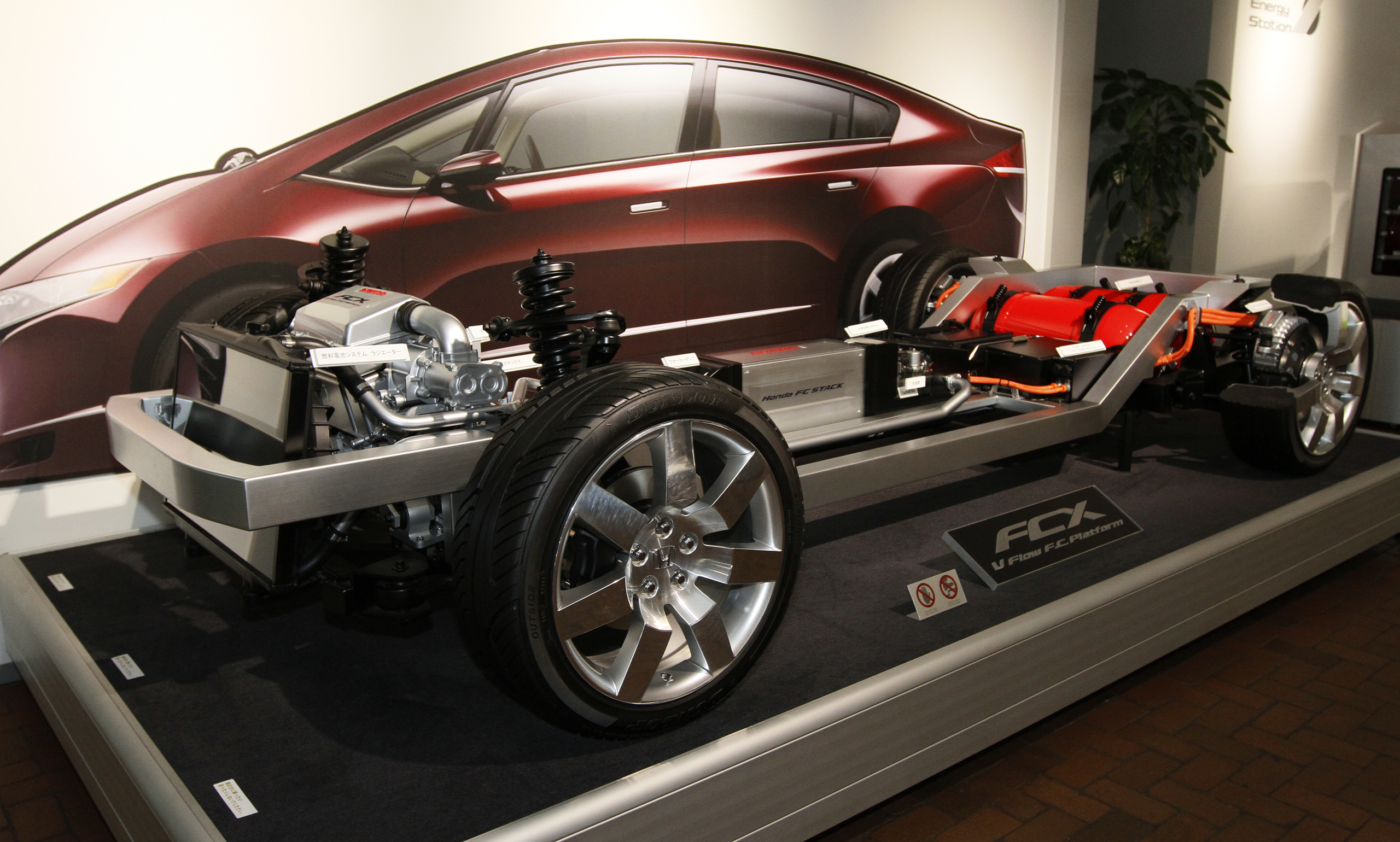
Alternative fuels have been around for decades and have never really taken off.  Recently, the world has seen a huge influx of electric cars that have hit the road.  These electric cars have been relatively successful given the fact that the technology has also been around for several decades now.  Yet, it is remains a mystery that alternative fuel cars such as hydrogen or propane, which have been around for a similar amount of time, have never seen any success.
Morio
 Fortunately, there are companies that are willing to utilize these alternative fuels on a large scale.  Like many companies, they have made the move to use these alternative fuels to save money and increase their margins.  Nevertheless, this change to more sustainable fuel sources is better for the environment.  Companies such as Toyota, Hyundai, Honda, and Mercedes are attempting to mass produce a hydrogen fueled cars in the very near future.  Also, UPS is attempting to have a fleet of trucks powered by Propane.
 Sadly, the feasibility for new technologies in the competitive car and energy market is always an issue.  The issues seem to always hinge around three main factors.  First, the car has to be affordable to purchase for the average consumer.  Then, the next issue is trying to find fueling locations.  Finally, the owner of the vehicle has to find where to get the car maintained for a reasonable price.  Infrastructure, as in any new technology, is usually extremely expensive.

Energy.gov
Regardless of the challenges the fact remains the same, propane and hydrogen vehicles will be better for the environment.  Propane creates lower CO2 emissions and Hydrogen has zero CO2 emissions.  As a matter of fact, Hydrogen vehicles only emit pure water vapor into the atmosphere.  When corporations can figure out a cost effective way to incorporate this technology into their vehicles the price for private citizens will go down and the gasoline will become a thing of the past.

Wednesday, February 5, 2014

Bio-fuels - Extraordinary Possibilities


Bio-fuels: Extraordinary Possibilities
Bio-fuels have been known to be an excellent replacement for traditional gasoline and diesel for years.  Fossil fuel production, especially when obtained through hydraulic fracturing, can cause significant damage to the environment.  Eco-Enthusiasts have gone to great lengths to make their cars compatible with this new fuel.  These people have the will and desire to be completely free of fossil fuels.  Sadly, none of these bio-fuels have actually achieved any real traction.  Most people, especially those with busy schedules, have not gone to such lengths and have instead decided to avoid the hassle and cost of converting their vehicles.  No car company or energy company has come up with a solution to this problem.
newscenter.lbl.gov
 Part of the problem, which is typical of new technologies, is that the cost of purchasing this new equipment is too expensive for the customer.  Furthermore, obtaining bio-fuels in the open market, especially in the United States, is significantly more difficult than obtaining gasoline or diesel.  It is also difficult for the leadership of publicly traded companies to convince their shareholders that making an investment/risk in the bio-fuels market would actually pay off in the near-term.  Shareholders, in most cases, want to do what is in their financial best interest and not necessarily what is in the best interest of energy independence.
bloggingbiofuels.com
Bio-fuels do have a bright future when they can be applied to a market driven economy effectively.  Designs must be highly adaptable and attractive to the end user.  For instance, a successful Eco-friendly vehicle would have a solar panel on the top of the car, a battery plug in on one side of the car, and port for filling bio-fuel on the other side.  By giving the end user a variety of options you make the vehicle more attractive and marketable.  With a mix of wind, solar, hydroelectric, and wave energy, these bio-fuels can allow society to end its dependence on fossil fuels.
civitas.org.uk
The one thing that is lacking in the discussion is a solution that does not put Automotive or Energy Companies in a defensive posture.  Actually, an Energy and Automotive Company partnership would have the greatest chance of successfully designing, building, marketing, and distributing bio-fuel cars to the marketplace.  A partnership like this makes sense because the organizations have a symbiotic relationship with each other.  This partnership would also allow both organizations to reduce the risk inherent in a significantly challenging investment.  Ironically, there are already some groups trying to figure out how to produce bio-fuels out of organic waste.  Mass producing such a concept would help drive the conversion from gasoline/diesel to bio-fuels.