Showing posts with label Car. Show all posts

Thursday, January 8, 2015

Recycling Batteries and The Environmental Impact


Recycling Batteries and The Environmental Impact

Batteries are vital to our daily live and there are no viable technological substitutes for batteries.  Batteries are used in everything from our cars, phones, tablets, laptops, calculators, flashlights, and much more.  Eventually, these batteries lose their charge and are usually discarded improperly.  Improper disposal causes toxins such as cadmium, nickel, lithium, and alkaline to enter into the environment.  Recycling programs are capable of reducing this environmental impact when they are utilized.
int49project
During waste treatment and or the incineration process these chemicals can get into the water table and into the air.  Initially the soil will absorb the chemicals and the effects of the pollution will not be immediately noticeable.  However, the health of animals can be negatively impacted if they consume plants that grow in the contaminated soil.  Humans can also be harmed by these toxic chemicals if they consume animals that were exposed.
Batteries are recycled in a fairly straight forward process.  First, the metal or plastic coverings are removed and melted down into pellets that will be reused in new batteries.  Next, the internal components, such as lead, are removed and also melted down into pellets.  Then, the remaining sodium sulfate, which acts as an electrolyte while in use, is removed and formed into reusable crystals.  Almost all of these components are reused for new batteries.
Ibrahim and Ilinca
Increasing the participation rate for recycling programs is the greatest challenge for most countries.  One of the ways to increase participation is to attach a deposit to each battery.  This technique mirrors that of plastic bottle recycling.  The deposit will be given to the person delivering the batteries as a way of incentivizing environmentally friendly behavior.  Until we can find a replacement for batteries we must have a way of insuring that people are keeping them out of the landfills and incinerators.

Additional Reading

Sunday, March 16, 2014

Alternative Fuels: The Future of Travel


Alternative Fuels: The Future of Travel

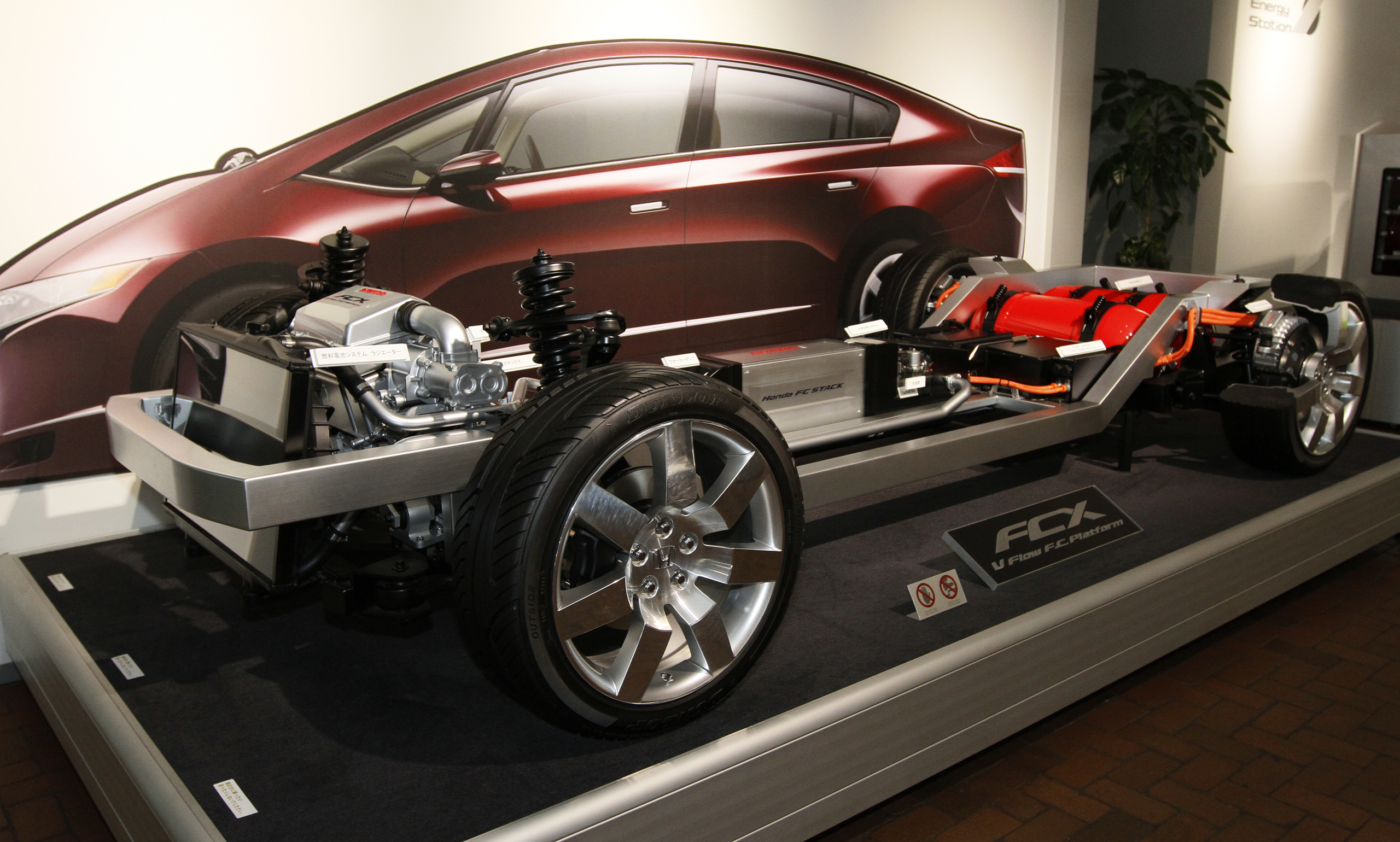
Alternative fuels have been around for decades and have never really taken off.  Recently, the world has seen a huge influx of electric cars that have hit the road.  These electric cars have been relatively successful given the fact that the technology has also been around for several decades now.  Yet, it is remains a mystery that alternative fuel cars such as hydrogen or propane, which have been around for a similar amount of time, have never seen any success.
Morio
 Fortunately, there are companies that are willing to utilize these alternative fuels on a large scale.  Like many companies, they have made the move to use these alternative fuels to save money and increase their margins.  Nevertheless, this change to more sustainable fuel sources is better for the environment.  Companies such as Toyota, Hyundai, Honda, and Mercedes are attempting to mass produce a hydrogen fueled cars in the very near future.  Also, UPS is attempting to have a fleet of trucks powered by Propane.
 Sadly, the feasibility for new technologies in the competitive car and energy market is always an issue.  The issues seem to always hinge around three main factors.  First, the car has to be affordable to purchase for the average consumer.  Then, the next issue is trying to find fueling locations.  Finally, the owner of the vehicle has to find where to get the car maintained for a reasonable price.  Infrastructure, as in any new technology, is usually extremely expensive.

Energy.gov
Regardless of the challenges the fact remains the same, propane and hydrogen vehicles will be better for the environment.  Propane creates lower CO2 emissions and Hydrogen has zero CO2 emissions.  As a matter of fact, Hydrogen vehicles only emit pure water vapor into the atmosphere.  When corporations can figure out a cost effective way to incorporate this technology into their vehicles the price for private citizens will go down and the gasoline will become a thing of the past.

Tuesday, January 28, 2014

Electric Cars: Why They Are Not Moving Customers


Electric Cars: Why They Are Not Moving Customers


On its surface, purchasing an electric car should be an easy and sensible decision for any car buyer.  Not surprisingly, you do not see truck and SUV drivers going out to purchase an electric car.  Most utility vehicles, gasoline or diesel, have the horse power and towing capacity required to attract their customer base.  However, when it comes to cars most car, you do not see large numbers of people driving 100% electric cars.  When you do see an eco-friendly model car, it is almost always a hybrid model.  From a purely business standpoint, unless the customer is intrinsically motivated to protect the environment, there is little reason for a traditional car owner to purchase one of these new electric vehicles.
Tony Hisgett
 The first reason the average car customer is not purchasing an electric vehicle is the styling.  All customers want to drive cars that are aesthetically appealing.  This is not to say that electric cars are completely unattractive.  However, almost all 100% electric cars are far too abstract or futuristic in design to appeal to the average car driver.  To attract more customers the automobile industry should introduce 100% electric versions of their already top selling models.  By selling popular models the car companies can leverage their existing infrastructure to convert traditional car drivers into electric car drivers.  This would be more effective and less expensive than designing, marketing, and testing a whole new electric car model.

Cytech
The cost of purchasing and maintaining an electric car is another deterrent.  With more and more customers going through difficult time financially it is little wonder that they are choosing their pocketbooks before the environment.  This may seem cruel and short sighted, but for those who are in tough financial straits keeping food on the table is much more appealing than a new car.  The cost of maintenance on an electric vehicle is also more expensive in comparison to a traditional gasoline model.  Until the price of purchasing and maintaining an electric car goes down, customers will continue to choose traditional models in large numbers.

Ludovic Hirlimann
The greatest obstacle to the proliferation of the electric car, especially in remote locations, is the dearth of charging stations.  Current owners of 100% electric cars are aware of the fact that finding charging stations can be a significant and daunting challenge.  Finding a charging station on some stretches of highway is completely out of the question.  Without numerous charging stations there is little reason for car customers to purchase electric cars.  Ironically, there is little reason for gasoline station owners to purchase a charging station with so few electric cars on the road.  However, retro-fitting or redesigning an existing model so that it is equipped with a solar panel roof may help to give these vehicles more range.